
Gut Flora in Infants: When Is It Established and Why Early Care Matters

After the weaning period, an infant’s gut microbiome reaches the same diversity as an adult’s.
When is gut flora established? By the end of the weaning period, a child’s intestinal microbiome reaches diversity comparable to adults.
While in the womb, a fetus’s gut is considered sterile. In contrast, the adult gut contains roughly 1,000 different bacterial species, totaling 100 trillion to 1,000 trillion bacteria. This symbiotic relationship with gut bacteria begins at birth.
- In the first 1–2 days after birth, newborn stool contains almost no bacteria.
- Within 24 hours, Escherichia coli and Staphylococcus (potentially harmful bacteria), along with Enterococcus and Clostridium (neutral or beneficial bacteria), start to proliferate.
- By day 3–4, lactic acid bacteria and Bifidobacteria (beneficial bacteria) begin to increase.
After these initial stages, a variety of bacteria start colonizing the gut. By around 6 months of age, after the weaning period, the infant’s gut microbiota reaches a stable phase, showing adult-like diversity in bacterial composition.
However, studies show that feeding patterns—whether breastfeeding, formula, or solid foods—can significantly influence the gut microbiome during the first 2–3 years of life. From childhood through adolescence (ages 4–17), bacterial diversity continues to increase, eventually developing sex-specific microbial patterns.
In summary, gut bacteria are initially transferred from the mother and acquired from the surrounding environment, starting a symbiotic relationship. After a period of instability in infancy, the gut microbiome stabilizes during early childhood and matures through childhood into adolescence.
How Birth Method and Feeding Patterns Affect Gut Microbiome Diversity

Research suggests that the relationship between humans and bacteria may begin even before birth, as bacteria have been detected in the placenta and umbilical cord, potentially influencing the composition of the infant gut microbiome.
The mode of delivery at birth has a direct impact on gut microbiome diversity. Studies report that infants born vaginally tend to have a more diverse and healthy bacterial community compared to those born via cesarean section.
Additionally, feeding patterns, whether breastfeeding, formula feeding, or introducing solid foods, can significantly alter the diversity of the gut microbiota.
One study highlights the role of human milk oligosaccharides (HMOs) found in breast milk:
- Colostrum: ~2% concentration of HMOs
- Mature milk: ~1% concentration of HMOs
HMOs selectively promote the growth of Bifidobacteria, beneficial bacteria that support a healthy gut environment in infants.
Supporting Gut Health from the Weaning Stage Leads to Lifelong Wellness
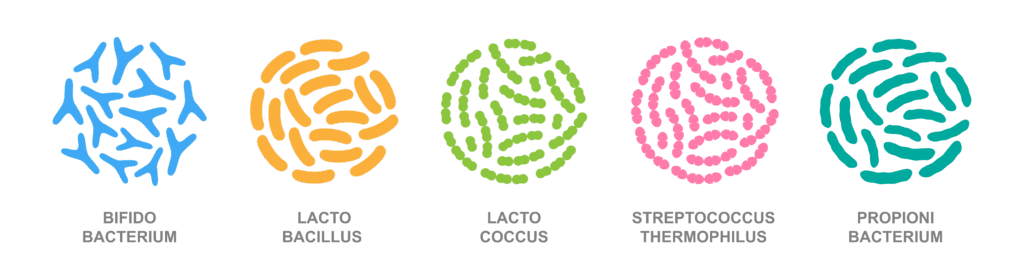
During infancy and early childhood (0–3 years), the gut microbiome is highly dynamic. It is therefore important to support gut health by providing beneficial bacteria such as lactic acid bacteria, Bifidobacteria, and Bacillus subtilis (found in natto), along with dietary fiber, especially soluble fiber, through fermented foods.
Maintaining a healthy gut during this period can contribute to:
- Proper growth and development
- Reduced risk of allergies
- Stronger immune function
- Overall long-term health
This is particularly important for infants born via cesarean section or those primarily fed formula, as careful attention to gut-friendly foods during weaning can help them enjoy a healthier early childhood.

Even in adults, gut microbiome diversity and balance are critical for maintaining health. However, establishing a healthy gut during infancy is especially vital because it can influence growth, immune development, and long-term wellness.
Supporting gut health helps regulate digestion, nutrient absorption, and metabolism of foods and medications, and contributes to overall physical and mental well-being. By managing daily diet and stress, and by actively including fermented foods and dietary fiber, parents can help their children maintain healthy digestion and enjoy a happy, vibrant early childhood.
Final Thoughts: Supporting Your Child’s Gut Health Safely

Establishing a healthy gut microbiome from birth through early childhood is a crucial step in supporting your child’s growth, immune function, and long-term health. Introducing fermented foods like natto, along with dietary fiber and probiotics, can help promote a balanced gut environment during the dynamic weaning period.
Important note: This article is intended for informational purposes only and does not constitute medical advice. Always consult a pediatrician or qualified healthcare professional before making significant changes to your child’s diet, particularly when introducing fermented foods, supplements, or probiotics. Individual sensitivities, allergies, or health conditions may affect your child’s suitability for specific foods.
By following safe preparation methods, observing your child’s tolerance, and providing a balanced diet, you can help foster a healthy gut environment that may benefit digestive health, immunity, and overall well-being well into adulthood.
References/Websites (Japanese)1) What is the Intestinal Microbiota (Intestinal Flora)? Health and Longevity Network: Foundation for Longevity Science
https://www.tyojyu.or.jp/net/kenkou-tyoju/kenko-cho/chonai-saikin.html
2) Shigeki Baba, Masaya Sasaki, Akira Ando: Intestinal Microbiota and Dysbiosis, Journal of the Japanese Society for Parenteral and Enteral Nutrition, 33 (5), 1099-1104, 2018
3) Kentaro Shimizu et al.: Intestinal Microbiota, Changes in the Intestinal Environment, and the Efficacy of Synbiotic Therapy in SIRS Patients, Journal of the Japanese Society of Emergency Medicine, 17, 833-44, 2006
4) Chihaya Yamada: Metabolic Functions of Anaerobic Bacteria Living in the Intestines of Humans and Animals: From the Metabolic Functions of Bifidobacteria and Methanogens to Applied Research, Chemistry and Biology, 60 (9), 446-452, 2022References/Websites (English)
5) Hui Li, Junjun Ni and Hong Qing:Gut Microbiota: Critical Controller and Intervention Targett in Brain Aging and Cognitive Impairment. Front. Aging Neurosci., 25 June 2021, Sec. Nurocognitive Aging and Behavior,
http://doi.org/10.3389/fnagi.2021.671142